
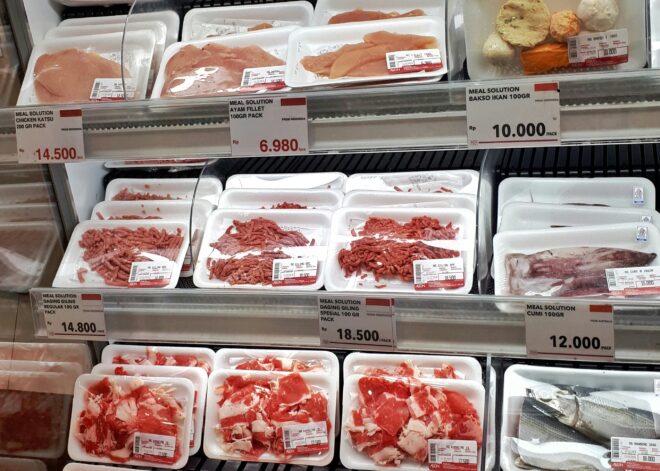
Let’s say you’re sautéeing ground beef. Look at the meat you’re stirring around: what’s all that water in your frying pan? It’s water all right, but you paid for meat, not H2O. It’s right to ask if this a hidden ingredient, like meat glue. To figure out how much you paid for that water, drain […]
The post Are You Paying For Meat, Or For Water? appeared first on Green Prophet.
Let’s say you’re sautéeing ground beef. Look at the meat you’re stirring around: what’s all that water in your frying pan? It’s water all right, but you paid for meat, not H2O. It’s right to ask if this a hidden ingredient, like meat glue.
To figure out how much you paid for that water, drain it off and measure it. 1 cup of water equals about 236 grams, or 0.5 lb. Divide that into the price per kilo/lb that you paid for that package of raw ground beef, and prepare for a shock.
Cooking causes loss of natural meat fluids, about 25% of the weight. Injected meat may lose up to 40% weight. Even discounting natural loss of juices in cooking, it’s likely you paid the price of meat for that water. And you’re short of the amount of food you were counting on.
Another experiment, this one with packaged raw meat: take the piece off the damp absorbent pad it sat on, and weigh it. You may find that it weighs less than stated on the label by as much as 15%. That was water absorbed by the pad. And that’s without accounting for water leeched out when the meat hits a hot pan.
Many manufacturers inject water or saline solution, or water plus salt, phosphate, and flavorings into raw beef, pork, chicken, turkey, and some seafoods. This increases the product’s saleable weight. And it increases manufacturers’ profit per animal; water is cheaper than meat, after all. Phosphates make the meat retain that added water, giving it a juicy appearance and texture.
According to the USDA, about 30% of poultry, 15% of beef, and 90% of pork are injected with salty liquids. This is the FSIS’s detailed breakdown of water in meat and poultry.
The meat is treated before getting weighed, packaged, and labeled; when the supermarket receives the product, it’s ready to sell.
Injecting saline into meat is called “plumping” or “enhancing.” It’s a recognized, governnment regulated practice. Meat manufacturers justify plumping by claiming that it grants meat and poultry better flavor and texture, (and makes them more marketable) when treated so. That’s probably true. But wait, what happened to the original flavor and juiciness?
It’s a problem. Today’s consumers demand meat and poultry bred to have less fat. Because fat contains much of the flavor and protects the natural juices, low-fat proteins tend to dry up in cooking and lose flavor. Consumers like to buy the most attractive product, and expect retail chains to conform to standard weight and appearance. From the processor’s and supermarket’s point of view, pumping salty, flavored water and phosphate into your steak is therefore doing you a favor.
Plumping’s not new, but consumers have become aware and vocal about it only recently. There were scandals in the UK about water-injected chicken and pork as far back as 2017.
Health hazards
More recently, consumers have brought up other related issues. Safety, for example. The Food Safety and Inspection Service (FSIS) lists injected meat as a high-risk carrier of E. coli bacteria, which is often found on the surface of meat. When the needles that insert the salt solution penetrate the meat, the bacteria is pushed in deeply. Cooking may not kill it, especially when the meat’s served rare.
To avoid bacterial infection in injected meat, the FSIS recommends, but does not require, that processors apply “an allowed antimicrobial agent to the surface of the product prior to processing.” What antimicrobial agents are these? And how are they applied? We aren’t told.
Salt and water sounds harmless, but the consumer eating injected meat is getting more sodium in their diet than they’re aware or can keep track of. This could be bad news for people with high blood pressure or heart disease who must minimize their salt intake.
Even meat labeled organic may contain injected saline, because FSIS lists salt and water as organic. The FSIS allows selling injected meat as “natural” and “fresh” unless the added solution changes the product’s nature in ways that require different labeling. If you want to make absolutely sure that product is free of added salt and water, look for a statement on the label reading “no artificial ingredients,” “minimally processed,” or similar.
A person standing in the supermarket and considering the label on a meat product may well wonder where they should put their trust. Must they Google every brand to feel comfortable eating it? It’s one thing to inject brine into your Thanksgiving turkey, and some people choose to, but the cook should be in control over that, not the meat processing factory.
Red flags
If the product was injected, the package label should indicate that it contains X amount of added solution. Conversely, it may read that it’s X percent meat (or chicken, or fish). You’re to understand that the missing percent is water treated with salt or salt plus phosphate.
Look on the label for the words enhanced, marinated, broth, and flavored. Those are signs that the meat has been interfered with. Avoid food packaged in sauce; you may be taking home chemical enhancers, fillers, preservatives, and yet more salt.
On the other hand, if the label reads “no added solutions,” “minimally processed,” “no artificial ingredients” or “100% beef (or fish or chicken) ” – or the listed ingredients don’t include water, salt, or phosphate, it’s probably honest meat.
If you can, buy whole cuts of roasts and chops. Learn to trim them at home. Or if that’s too much trouble, buy your supermarket meat from the butcher counter. Ask if they grind their own.
Even better, buy meat from local farms. Best of all, if you can, is to make a co-op order of freshly butchered meat together with neighbors, friends, or work colleagues. It will cost more, but consider water you pay for in plumped meat.
Photo by Fitri Ariningrum on Unsplash
The post Are You Paying For Meat, Or For Water? appeared first on Green Prophet.