Scientists and sound artists have also translated plant electrical signals into audible frequencies, creating “plant music” that reveals hidden rhythms in living organisms. And Björk, through projects like Biophilia, has blended natural processes, digital ecosystems, and experimental instrumentation to explore how the environment can shape melody, structure, and emotional tone.
Pantanal Jam emerges in this lineage but roots itself directly in a living biome, playing not about nature or around it, but with it in real time.
The post Can a jungle jam? Brazil percussionist finds out appeared first on Green Prophet.
In an era when the climate crisis often feels abstract, distant, or buried beneath the data of carbon credits or financing mechanisms of COP30, a new artistic project from Brazil is cutting through the noise—literally—by turning one of the world’s most fragile ecosystems into a musical collaborator.
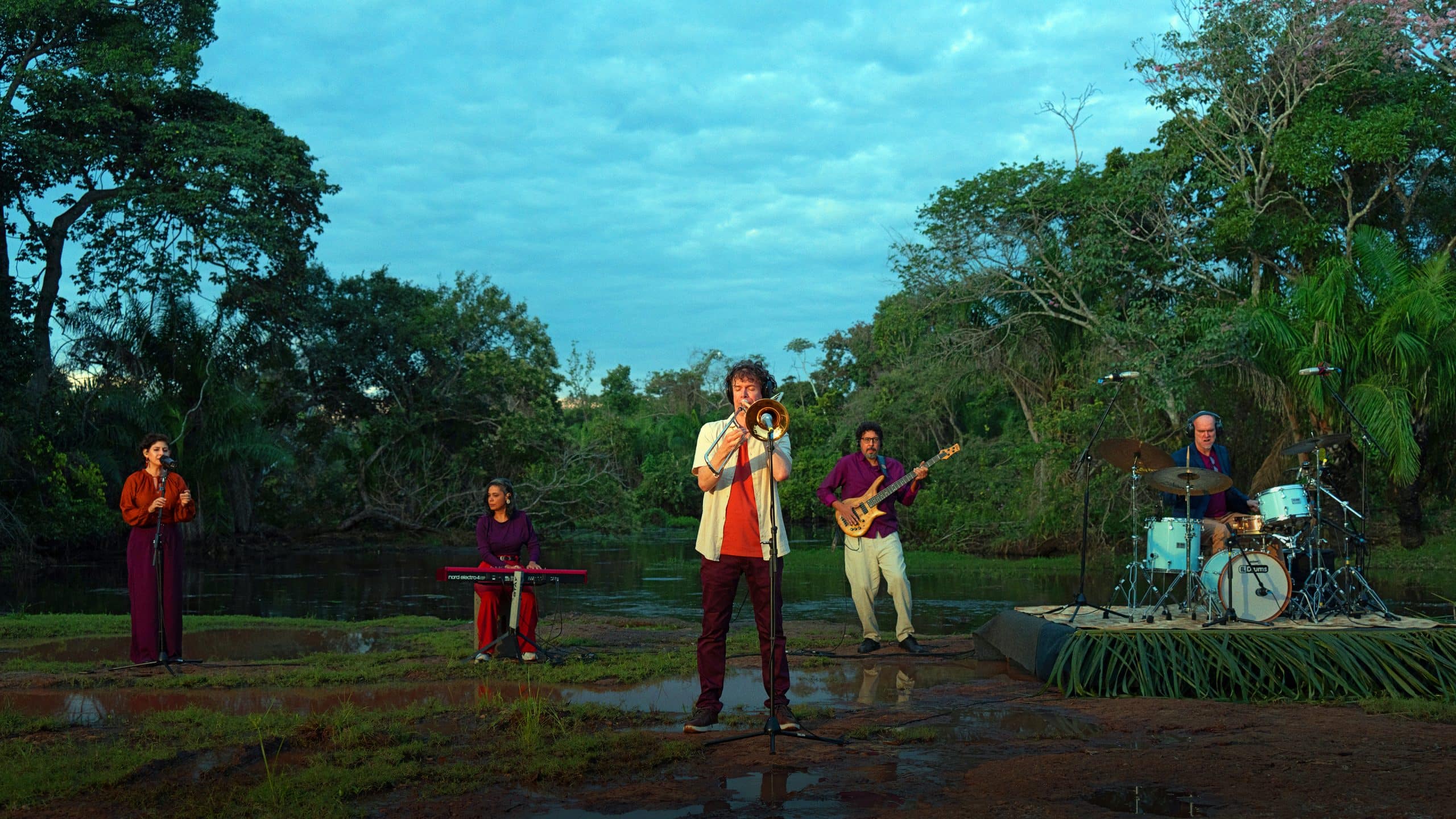
Pantanal Jam, a groundbreaking sound experiment created inside the world’s largest tropical wetland of Brazil, treats nature not as a backdrop but as a full artistic partner. The Pantanal—home to jaguars, giant otters, macaws, and more than 4,700 documented species—becomes both muse and musician, shaping the album’s rhythms, motifs, and improvisations in real time.
To understand the philosophy behind the project, Green Prophet spoke with Sandro Moreno, drummer, percussionist, and co-creator of Pantanal Jam.
His reflections reveal not only the making of an album but the emergence of a new ecological listening practice—one that invites humans to stop dominating nature’s soundscape and start collaborating with it.
Take the album “Espiral,” says Moreno. “At the very beginning of the track, a jaguar growls – not as a background effect, but as a participating artist. That growl shaped the pulse of the moment. It entered the rhythm like a beat, blending seamlessly with the percussion and setting the mood for everything that followed. It was wild, unexpected, and perfect.
“Throughout the album, this conversation with nature continues. Birds like the thrush, the Pantanal blackbird, the seriema, the hornero, the potoo, the ibis, macaws, and parakeets – they didn’t just inspire us. They played with us. Their calls, cries, and chatter became part of the music’s soul, interacting with our drums, guitars, and voices in spontaneous harmony.
“This wasn’t about layering nature sounds onto music in post-production. It was about playing with nature – responding to its rhythms in real time, allowing its unpredictability to shape our own.”
Musicians have long searched for ways to collaborate with the natural world, though few have taken it as far as Pantanal Jam.
Stevie Wonder experimented with field recordings and environmental textures on albums like Journey Through the Secret Life of Plants, one of the earliest mainstream attempts to treat nature as a co-composer rather than a backdrop.
If you love this kind of sonic ecology, you’ll probably also enjoy our stories about Plants that talk using sound and AI, how we might one day speak “dolphin”, and crickets composing the soundscape at the Venice Biennale.
Scientists and sound artists have also translated plant electrical signals into audible frequencies, creating “plant music” that reveals hidden rhythms in living organisms. And Björk, through projects like Biophilia, has blended natural processes, digital ecosystems, and experimental instrumentation to explore how the environment can shape melody, structure, and emotional tone.
Pantanal Jam emerges in this lineage but roots itself directly in a living biome, playing not about nature or around it, but with it in real time.
According to Moreno, when the group set out to create Pantanal Jam, they weren’t planning to simply compose music. They were planning to listen—deeply—to “one of the most biodiverse and magical places on Earth,” responding to it “in the most honest way we could: through sound.”
Moreno describes the concept as letting the living landscape lead: the wind, the water, the rustling trees, and most importantly the animals. These weren’t atmosphere or incidental texture. They acted as “fellow musicians,” their voices forming motifs that shaped the improvisations and guided the compositions.
For a percussionist, this demanded a different kind of listening. Moreno says rhythm exists everywhere in the Pantanal: in the lapping of water, the beating of wings, distant thunder, or dawn animal calls. Playing in that environment required letting go of control, responding intuitively, and allowing the environment to lead. It became less about performance and more about presence.
His description of the project extends beyond technique. Pantanal Jam, he says, is an invitation to reconnect with the earth through music, to experience the wild not as an accessory but as part of our own creative process. Art doesn’t have to dominate nature. It can dance with it.
The Panatal in Brazil. National Geographic.
This approach lands at a crucial environmental moment. The Pantanal is under escalating threat. Wildfires in recent years have burned unprecedented areas, droughts have intensified, and agricultural expansion continues to alter the wetland’s hydrology. Projects like Pantanal Jam do not pretend to solve these systemic issues, but they shift the cultural lens: they ask listeners to hear the biome as a living, expressive presence rather than a resource or backdrop.
By bringing listeners into this sound world, the project acts as both artistic innovation and subtle ecological advocacy. It reminds us that ecosystems are not silent. They speak constantly—if we listen.
The post Can a jungle jam? Brazil percussionist finds out appeared first on Green Prophet.