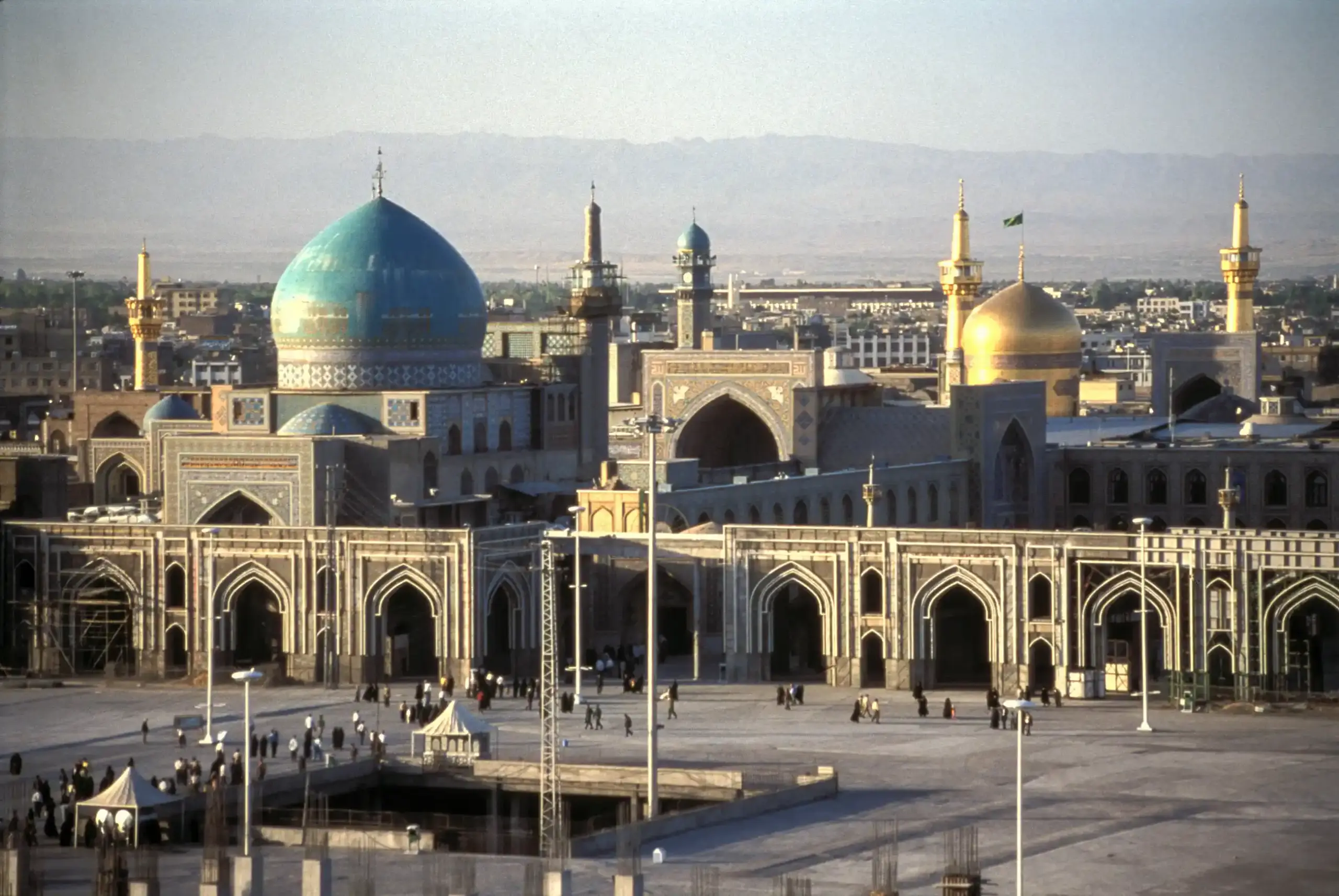
Iran’s second-largest city, Mashhad, is facing an acute water emergency after dam reservoirs feeding the city fell below three percent capacity, according to Iranian state and local media. Officials warn that without rainfall or improved inflows from neighboring Afghanistan, the city’s supply could soon collapse.
The post Iran’s holiest city about to run dry as terror chosen over water management appeared first on Green Prophet.
Water systems are on the verge of collage in Iran’s holiest city, second in size only to Tehran
Iran’s second-largest city, Mashhad, is facing an acute water emergency after dam reservoirs feeding the city fell below three percent capacity, according to Iranian state and local media. Officials warn that without rainfall or improved inflows from neighboring Afghanistan, the city’s supply could soon collapse.
“The water storage in Mashhad’s dams has now fallen to less than three percent,” Hossein Esmaeilian, the chief executive of the water company in Iran’s second largest city by population, tells ISNA news agency. He adds that “the current situation shows that managing water use is no longer merely a recommendation — it has become a necessity.”
Mashhad lies in Razavi Khorasan Province in northeastern Iran, a semi-arid region dependent on a small network of dams for drinking water, agriculture, and limited power generation. The most critical of these are the Doosti (Friendship) Dam, built jointly by Iran and Turkmenistan on the Hari (Harirud) River; and the smaller Kardeh and Torogh dams that directly supply the urban network.
The Doosti Dam, completed in 2004 near the Turkmen border, was designed to provide up to 60 % of Mashhad’s potable water. But its inflows have plummeted after Afghanistan’s Taliban government inaugurated the Pashdan Dam upstream on the Hari River near Herat earlier this year. Iranian officials accuse Kabul of violating cross-border water agreements and cutting off critical flows. The Iranian daily Jomhouri-e Eslami warned this week that the new Afghan dam “threatens the very survival” of Mashhad’s reservoirs.
An ancient Qanat system in Persia. Spread throughout the arid Middle East, these systems predated Roman aqueducts but the historical narrative isn’t told.
The Hari River — about 1,000 kilometers long — originates in Afghanistan’s central highlands, flows west through Herat into Iran, and ends in Turkmenistan’s Karakum Desert. Historically, its seasonal floods recharged aquifers and sustained farming along the Iranian border. But with multiple new Afghan dams under Taliban control, less water is reaching Iran’s northeastern provinces, even as rising temperatures and a prolonged regional drought accelerate evaporation.
Related: The Taliban kills Japanese water hero
Within Iran, years of poor water management compound the crisis. Kardeh and Torogh dams, both built in the 1970s, are now near “dead storage,” with barely enough volume for municipal use. Over-extraction of groundwater around Mashhad — home to more than three million people and millions of pilgrims annually — has further destabilized the system, causing land subsidence and salinization of wells.
Iran has also been spending billions normalizing terror by finding Palestinians to join Hamas, Lebanese to join the Hezbollah and for the Yemenites to become Houthis. Paying for conflict and not supporting your own people, comes with a high cost. The Iranian regime hates Saudi Arabia, the UAE and Israel so much that it will sacrifice anything in its global jihad.
Experts say the situation underscores both climate vulnerability and political risk in transboundary basins. Iran’s government is pressing for negotiations with the Taliban over shared water rights, as Afghanistan pulls the plug on its water by creating its own dams, but cooperation remains uncertain amid border skirmishes and mistrust.
Grand Ethiopian Renaissance Dam (GERD) on the Blue Nile — Africa’s largest hydroelectric project reshaping East Africa’s power supply and sparking regional water security debates.
If inflows from Afghanistan remain restricted and rainfall fails again this winter, Mashhad could face mandatory rationing and long-term aquifer collapse — a warning sign for the entire region as climate change and geopolitics converge in Iran’s drying east. Could we see a bigger conflict between Iran and Afghanistan? A good possibility. Similar tensions have been brewing for years between Ethiopia building the GERD dam and Egypt which is being denied water upstream.
If you’ve ever travelled to cities like Amman, Jordan, the water-stressed city shows how life goes on with water stress. Some city folks get water piped in once a week, but because municipal supply is so limited, many households, businesses, and institutions buy extra water from private tanker trucks and store this in private reservoirs so they never run out.
The post Iran’s holiest city about to run dry as terror chosen over water management appeared first on Green Prophet.